Grip Performance
Testing for
Functional Grip Socks.
How HaloCors validates silicone adhesion, anti-slip pattern coverage, and grip stability across Pilates, trampoline, and medical usage scenarios -- before every shipment.
Why Grip Performance Testing Matters
The Logic Behind
Anti-Slip Validation.
Grip sock performance is not just about how the sock looks. It depends on material adhesion, pattern geometry, surface compatibility, and durability under repeated use and washing.
01 -- Adhesion Force
Silicone-to-Fabric Bond
The grip dot or pattern must bond firmly to the knitted sock base without peeling under lateral shear force. We test adhesion strength before and after washing cycles to confirm the bond holds.
02 -- Pattern Coverage
Grip Zone Layout
Coverage area, dot spacing, and pattern geometry directly affect how much contact surface exists between the sock and the floor. Full-sole, heel-free, and toe-only layouts each require different validation approaches.
03 -- Wash Durability
Repeated Wash Stability
Grip socks are washed repeatedly in real use. We simulate 30-50 wash cycles and inspect grip dot integrity, edge lifting, color retention, and overall adhesion performance after each test phase.
Grip Failure Root Cause Map
Material Issue
Low-grade PVC or silicone with insufficient viscosity causes early delamination, especially after 5-10 washes.
Application Defect
Uneven printing pressure or temperature variation during the heat-transfer process creates weak bond zones that peel under friction.
Pattern Design Gap
Insufficient coverage density or wrong dot geometry for the target surface (hardwood vs. mat vs. trampoline) reduces effective grip contact.
HaloCors Solution
Premium silicone + controlled application process + scenario-matched pattern layout + multi-phase wash durability QC eliminates all three failure modes.
Silicone Grip Technology
Why Silicone Outperforms
Standard PVC Grip.
Silicone grip is the preferred choice for premium fitness and medical markets because it delivers measurably stronger adhesion, better surface contact, and more durable wash performance compared to standard PVC anti-slip print.
Higher Friction Coefficient
Silicone has a naturally high friction coefficient on polished hardwood, Pilates reformer rails, and yoga mat surfaces -- the three most common fitness floor types.
Elastic Deformation Under Load
Silicone dots compress and expand under foot pressure, increasing the real contact area with the floor and improving grip stability during dynamic movement.
Wash-Resistant Bond
Silicone grip maintains adhesion integrity through 50+ wash cycles. PVC-based prints typically show edge lifting and partial delamination after 15-20 washes under standard conditions.
Skin-Safe & Hypoallergenic
Medical-grade silicone is non-toxic, latex-free, and suitable for sensitive skin -- a key requirement for medical non-slip socks and children's grip socks.
Silicone vs. PVC -- Performance Comparison
| Criteria | Silicone | PVC |
|---|---|---|
| Friction Coefficient | High (0.6-0.9) | Medium (0.4-0.6) |
| Wash Durability | 50+ cycles stable | 15-20 cycles typical |
| Elastic Deformation | Yes -- improves contact | Minimal |
| Skin Safety | Medical-grade available | Standard grade only |
| Edge Lift Risk | Low | Medium-High |
| Premium Market Fit | Pilates, Medical, Sports | Budget / entry-level |
| Unit Cost | Higher -- justified by performance | Lower |
Recommendation: For Pilates studios, yoga brands, and medical buyers, silicone grip is the correct specification. PVC is acceptable for trampoline park bulk orders where cost is the primary constraint.
Scenario-Based Performance
Different Surfaces.
Different Grip Requirements.
Each usage environment places different demands on grip material, pattern layout, and structural design. HaloCors evaluates grip performance against the specific surface and activity type.
Hardwood & Reformer Rail
Studio floors are typically polished hardwood or vinyl. Reformer rails are smooth aluminum. Both surfaces require high-friction silicone grip with full-sole or heel-and-toe coverage to prevent slipping during lateral movements and balance holds.
Silicone grip recommended
Full-sole or heel + toe coverage
High wash durability for studio resale
Grip performance tested on smooth vinyl
Trampoline Mesh & Foam
Trampoline surfaces are woven mesh or foam pads. The grip requirement focuses on preventing toe slip during jump landings. Heel-free or toe-only grip patterns are preferred to allow natural foot flex and reduce material stress during repeated bouncing.
Heel-free or toe-only grip layout
Abrasion resistance on mesh surface
Bulk pricing for park resale / rental
Grip tested under repetitive impact load
Hospital Tile & Linoleum
Hospital floors are polished tile or linoleum -- among the most slip-prone surfaces when wet. Medical non-slip socks require double-tread grip (top and bottom), consistent pattern coverage, and compliance documentation support for regulated procurement channels.
Double-tread (top + bottom) grip
ASTM reference testing available
Medical-grade silicone material
FDA pathway documentation support
Testing & Inspection Process
How We Verify
Grip Performance.
Every HaloCors grip sock order passes through a structured multi-phase inspection process covering material input, in-line production, wash durability, and pre-shipment final check.
Incoming Material
Raw Material Verification
Silicone and PVC grip compounds are inspected on arrival. Viscosity, curing behavior, and adhesion properties are verified against approved material specifications before production begins.
In-Line Production
Application Process Control
Temperature, pressure, and timing parameters for the heat-transfer application are monitored throughout production. Random pull samples are taken every hour to check adhesion consistency and pattern alignment.
Wash Durability
Accelerated Wash Cycle Test
Samples from each production batch are subjected to 30-50 machine wash cycles at 40°C. After each phase (10, 20, 30, 50 cycles), grip dots are inspected for edge lifting, delamination, color change, and adhesion loss.
Surface Friction
Floor Surface Friction Verification
Grip performance is verified against the target surface type -- hardwood, vinyl, tile, or trampoline mesh. ASTM reference methodology is applied for medical-grade orders requiring documented slip-resistance data.
Pre-Shipment
Final Inspection & Packing Check
100% visual inspection of grip coverage, pattern alignment, and sock construction before packing. Packing check confirms correct labeling, barcode, hangtag, and packaging specification per buyer requirements.
Pre-Shipment Grip Inspection Checklist
Grip Dot Adhesion -- No Lifting
All dots and pattern elements firmly bonded. No edge lifting detectable by finger-nail test.
Pattern Alignment -- Centered & Consistent
Grip pattern positioned correctly on sole. Left/right pair matching confirmed.
Coverage Density -- No Missing Zones
No skipped dots or incomplete print zones. Coverage matches approved sample specification.
Color Consistency -- Batch Matching
Grip color matches approved Pantone reference. No fading or discoloration from curing process.
Post-Wash Sample -- Adhesion Retained
Wash test batch sample confirms grip performance maintained after minimum 30 cycles.
Packaging & Label Accuracy
Correct size label, barcode, hangtag, and inner/outer carton marking per buyer specification.
Third-Party Testing Available
For buyers requiring independent lab reports, HaloCors can coordinate third-party ASTM or EN standard testing through approved testing labs. Contact us to discuss your specific compliance needs.
Product Recommendations
Grip-Tested Products
for Your Market.
All HaloCors product series are developed and tested with specific usage scenarios in mind. Each series can be customized with your logo, color, and packaging.
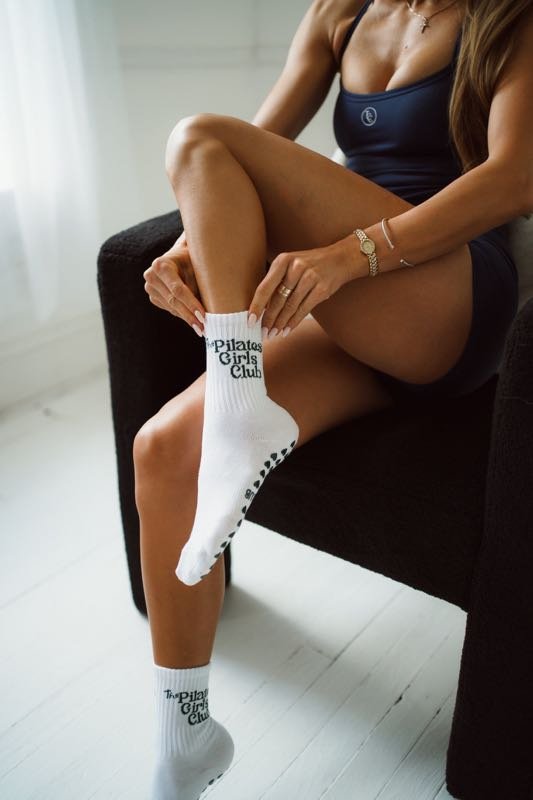
HC-0001
Custom: Logo · Color · Pattern · Material · Size
View ProductFrequently Asked Questions
Grip Testing
Questions Answered.
Common questions from B2B buyers about grip sock performance, testing methodology, and quality standards.
How do you test grip adhesion before shipment?
Every production batch includes a multi-phase grip inspection: incoming material verification, in-line process monitoring, accelerated wash cycle testing (30-50 cycles at 40°C), and a 100% visual pre-shipment check. We inspect for dot adhesion, edge lifting, pattern alignment, coverage density, and color consistency against the approved sample.
What is the difference between silicone and PVC grip in terms of performance?
Silicone grip is typically softer and more flexible, making it well suited to highly stretchable socks and applications where hand feel and elasticity are important. When the formulation, fabric, printing thickness, and curing conditions are properly matched, silicone can also provide excellent grip and wash durability.
PVC grip is generally more cost-effective and can still deliver reliable grip and durability when properly formulated and cured. It is widely suited to high-volume programs where cost efficiency, production consistency, and the required level of grip need to be balanced.
The actual performance of either material depends on more than the material itself. Grip pattern, print thickness, sock fabric, formulation, curing conditions, washing, and end-use requirements all affect the final result. For this reason, we recommend the grip system based on the specific product rather than assuming silicone or PVC is always superior.
Can you provide ASTM or EN standard test reports?
HaloCors applies ASTM reference methodology for internal grip testing, particularly for medical non-slip sock orders. For buyers requiring independent third-party lab reports (ASTM F489, EN 13287, or equivalent), we can coordinate testing through approved labs. The specific standard, cost, and timeline depend on your target market and compliance requirements -- contact us to discuss.
How many wash cycles can HaloCors grip socks withstand?
Our silicone grip products are tested to maintain adhesion integrity for 50+ machine wash cycles at 40°C with standard detergent. PVC grip products are tested to a minimum of 30 cycles. Real-world durability depends on washing temperature, detergent type, and drying method -- we recommend following the care label instructions we provide with each product.
Can I customize the grip pattern layout for my specific use case?
Yes. HaloCors supports custom grip pattern design including full-sole coverage, heel-and-toe zones, heel-free layouts for trampoline parks, toe-only grip, and bespoke geometric or branded patterns. We provide design mockups for approval before production. Our team can advise on the optimal pattern layout for your target surface and activity type.
What grip pattern options are available for medical non-slip socks?
Medical non-slip socks typically require double-tread grip -- silicone applied to both the sole and the top of the foot -- to prevent sliding when patients walk on polished hospital floors. We offer dot, wave, and full-coverage pattern options. Medical-grade silicone (non-toxic, latex-free) is used as standard for hospital and care facility applications. Documentation support for FDA pathway or EU regulatory requirements is available case by case.
Do you offer grip performance samples before placing a bulk order?
Yes. Sample development takes 7-10 days for approved projects. We strongly recommend requesting samples before bulk production to verify grip performance on your specific floor surface, confirm the pattern layout, and validate color and branding. Sample cost is typically credited against the first bulk order for qualified buyers.
Ready to Start?
Get Grip Performance
Validated for Your Market.
Whether you need testing support documentation, sample grip socks for evaluation, or a full custom production quote -- HaloCors responds within 1 business day.
Request Testing Support
Need grip test data, wash durability reports, ASTM reference documentation, or compliance support for your market? Tell us your requirements and we'll outline what's available.
Request Testing SupportRequest a Quote
Ready to discuss product specifications, MOQ, pricing, and customization options? Share your requirements and receive a detailed quotation within 1 business day.
Request a Quote